
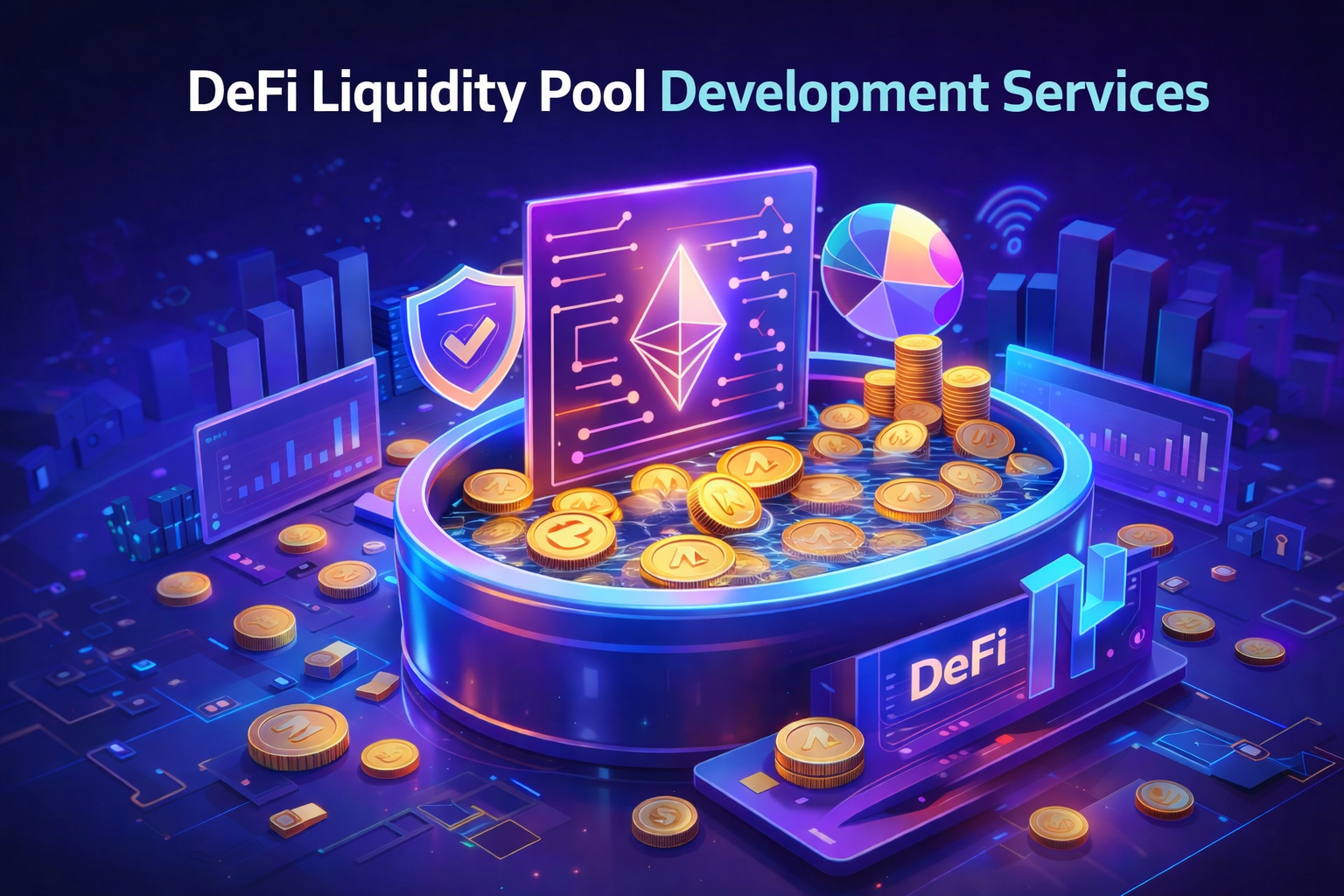
Liquidity pools have become one of the strongest yield-generating mechanisms in DeFi in 2026. Investors are actively allocating capital into decentralized protocols that offer 15–35% APY. While these returns may appear aggressive compared to traditional finance, they are driven by structured fee models, incentive systems, and optimized smart contract logic.
If you are planning liquidity pool smart contract development, understanding how these pools generate yield — and how to architect them securely — is essential for long-term success.
Understanding How Liquidity Pools Work
A liquidity pool is a blockchain-based smart contract that holds token reserves to facilitate decentralized trading, lending, or derivatives transactions. Instead of using traditional order books, decentralized exchanges rely on automated pricing algorithms. Users trade directly against pooled liquidity.
Liquidity providers deposit tokens into the pool. In return, they receive LP tokens that represent their share. Whenever trades occur, the protocol collects fees and distributes them proportionally to LPs. This continuous fee generation forms the base layer of APY.
Modern pools are far more advanced than early DeFi versions. They integrate dynamic fee adjustments, volatility-based pricing curves, and cross-chain compatibility to improve capital efficiency.
The Core Drivers Behind 15–35% APY
The primary source of yield comes from trading fees generated through automated market makers. A well-optimized AMM ensures efficient pricing and minimal slippage, increasing trading activity and revenue. This is why many DeFi startups rely on professional AMM development services to build scalable liquidity infrastructure.
Beyond trading fees, incentive rewards play a significant role. Many platforms distribute governance tokens to liquidity providers. These rewards increase effective yield, especially when token value appreciates alongside platform growth.
Another important layer is capital optimization. Advanced protocols integrate yield routing mechanisms that automatically deploy idle liquidity into lending platforms or staking systems. Strategic yield farming platform creation allows protocols to stack multiple revenue streams, increasing APY without solely relying on swap fees.
In 2026, derivatives integration has further amplified yield potential. Liquidity pools now back perpetual futures and options trading. These markets generate higher fee volume due to leverage, contributing to stronger LP returns.
The Role of Smart Contracts in Yield Generation
At the heart of every liquidity pool is its smart contract architecture. The contract must manage deposits, withdrawals, fee distribution, reward calculations, and risk controls automatically and accurately.
Secure and scalable DeFi smart contract development ensures that liquidity providers receive precise yield calculations without manipulation or vulnerability. Advanced contracts now include flash loan protection, oracle verification, slippage safeguards, and emergency pause mechanisms.
Without strong contract design, high APY claims are meaningless. Security remains the foundation of sustainable yield generation.
Managing Risks While Maintaining High Returns
Liquidity pools are powerful but not risk-free. Impermanent loss remains one of the primary risks for volatile token pairs. When asset prices diverge significantly, LPs may earn less than simple token holding.
Additionally, smart contract exploits, oracle manipulation, and sudden liquidity shifts can impact platform stability. This is why professional audits, stress testing, and real-time monitoring systems are essential during development.
Sustainable APY in 2026 is not about offering unrealistic returns. It is about balancing fee generation, token incentives, and risk management to create long-term growth.
Key Steps in Liquidity Pool Smart Contract Development
Building a high-performance liquidity pool begins with defining your economic model. You must determine trading fee percentages, incentive allocation, treasury structure, and token emission schedules. A poorly structured reward system can lead to inflation and unsustainable returns.
Next, choose the right blockchain infrastructure. Consider transaction speed, gas fees, network security, and ecosystem liquidity. Many developers now favor Layer 2 networks due to lower operational costs and higher scalability.
The development phase requires designing deposit logic, LP token minting mechanisms, dynamic pricing algorithms, and automated reward calculations. Integration with analytics dashboards improves transparency for liquidity providers.
Finally, rigorous auditing and compliance planning ensure platform resilience and user trust.
Why 2026 Is the Ideal Time to Launch
DeFi trading volume continues to grow globally. Institutional capital is gradually entering on-chain markets. Layer 2 scalability solutions have significantly reduced transaction costs. At the same time, users are more educated about liquidity provision and yield generation.
The infrastructure is mature. The demand is rising. Capital efficiency tools are more advanced than ever.
Liquidity pools are no longer experimental financial models. They are foundational components of decentralized finance ecosystems.
Final Thoughts
Liquidity pools generate 15–35% APY in 2026 because they combine trading fees, incentive rewards, derivatives integration, and optimized capital deployment strategies. When built correctly, they create sustainable revenue engines for both liquidity providers and protocol founders.
If you are considering liquidity pool smart contract development, focus on secure architecture, intelligent tokenomics, and scalable AMM design. With proper execution, your liquidity platform can attract capital, generate consistent yield, and become a core component of the evolving DeFi economy.


















0 Comments