
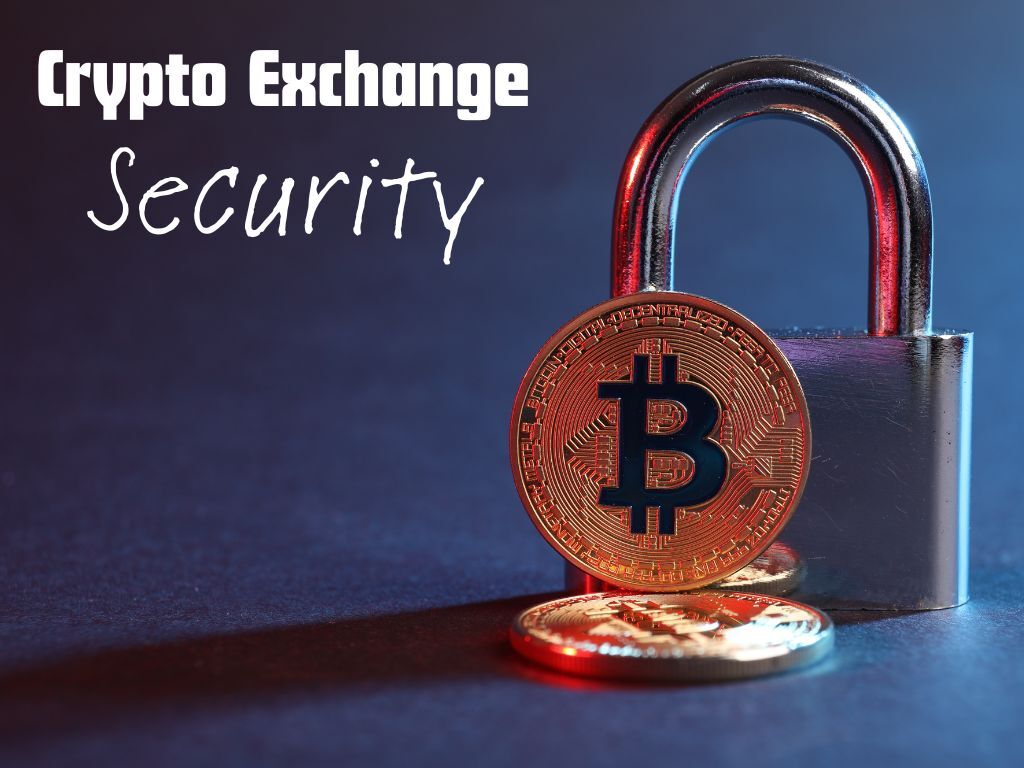
Cryptocurrency exchange security has evolved from afterthought to existential requirement. Security breaches and scams create notorious risks in cryptocurrency, with billions stolen annually from inadequately protected platforms. Development companies embedding security into platform DNA dominate 2025 because users now recognize that fancy features mean nothing if funds disappear overnight.
The Billion-Dollar Wake-Up Call
The cryptocurrency industry witnessed devastating security failures throughout its history. Mt. Gox’s 850,000 Bitcoin theft in 2014, Coincheck’s $530 million hack in 2018, and countless smaller breaches created cautionary tales studied by every serious exchange operator.
These incidents share common patterns: inadequate key management, insufficient access controls, unaudited smart contracts, and insider threats. Learning from these failures transforms security from compliance checkbox into core competitive advantage.
Modern exchanges protect billions in user assets through defense-in-depth strategies assuming attacks will occur and building resilient systems surviving attempted breaches. This mindset shift from prevention-only to prevention-plus-resilience defines professional security approaches.
Foundational Security Architecture
Cold Storage Dominance
Industry best practice maintains 95%+ of user funds in cold storage wallets completely disconnected from internet-connected systems. Hot wallets retain only operational liquidity necessary for processing withdrawals and trades.
Cold storage implementation varies from simple paper wallets to sophisticated multi-signature schemes requiring multiple physical keys stored in geographically distributed secure locations. Hardware security modules (HSMs) provide tamper-resistant key storage with cryptographic operation capabilities.
Gemini, Kraken, and other security-focused exchanges publish cold storage percentages and insurance coverage demonstrating commitment to asset protection. Transparency regarding custody practices builds user confidence while establishing industry accountability.
Multi-Signature Wallet Protocols
Multi-sig requirements prevent single points of failure by requiring multiple parties approving transactions before execution. A 3-of-5 scheme means any three out of five authorized parties must sign transactions, preventing both internal and external theft attempts.
Geographic distribution of signers across different time zones and jurisdictions provides operational continuity while reducing risks from localized threats like natural disasters or government actions. Clear succession planning ensures wallet access survives personnel changes.
Address Whitelisting and Withdrawal Delays
Restricting withdrawals to pre-approved addresses prevents attackers from immediately extracting stolen funds. Users add withdrawal addresses that undergo verification periods before activation, creating windows for detecting and preventing unauthorized changes.
Mandatory cooling-off periods between address additions and withdrawals provide additional security layers. While inconvenient, these delays prove acceptable to security-conscious users prioritizing asset protection over instant convenience.
Two-Factor Authentication Requirements
Mandatory 2FA using authenticator apps or hardware tokens provides significant security improvements over password-only authentication. SMS-based 2FA remains vulnerable to SIM-swapping attacks and should be discouraged or prohibited for high-value accounts.
Hardware security keys like YubiKey or Google Titan provide strongest authentication protection against phishing and account takeovers. Supporting multiple 2FA methods accommodates user preferences while maintaining security standards.
Smart Contract Security
Comprehensive Audit Processes
Every smart contract handling user funds requires professional security audits before deployment. Firms like Trail of Bits, ConsenSus Diligence, and OpenZeppelin specialize in identifying vulnerabilities through manual code review and automated analysis.
Multiple independent audits catch issues single auditors miss. Budget $20,000-$100,000 for thorough auditing depending on contract complexity. This investment prevents million-dollar exploits that audits would have identified.
Formal Verification
Mathematical proof techniques verify smart contract behavior matches specifications under all possible conditions. While resource-intensive, formal verification provides highest security assurances for critical systems handling significant value.
Runtime Verification, Certora, and academic research groups offer formal verification services. High-value protocols like Maker and Uniswap increasingly utilize these techniques for core contract components.
Bug Bounty Programs
Ongoing security requires continuous vigilance beyond launch audits. Bug bounty programs through platforms like Immunefi incentivize white-hat hackers finding and responsibly disclosing vulnerabilities before malicious exploitation.
Successful programs pay substantial rewards proportional to vulnerability severity. Critical issues warrant six-figure payments when they could prevent million-dollar thefts. These economics align security researchers with platform protection.
Upgradeability Considerations
Upgradeable contracts enable bug fixes and feature additions but introduce centralization and security concerns. Transparent proxy patterns, timelocks, and multisig upgrade controls balance flexibility against immutability benefits.
Clear communication about upgrade capabilities and governance processes builds user trust. Emergency pause mechanisms enable rapid response to discovered vulnerabilities without requiring immediate contract upgrades.
Infrastructure Security
DDoS Protection and Rate Limiting
Distributed denial-of-service attacks attempt overwhelming exchanges during market volatility when trading activity peaks naturally. Professional DDoS mitigation from Cloudflare, Akamai, or AWS Shield maintains availability during attacks.
Rate limiting prevents individual users or bots from monopolizing server resources. Sophisticated implementations distinguish between legitimate high-frequency trading and abusive bot activity.
Database Security and Encryption
User data including personal information, trading histories, and account balances requires protection at rest and in transit. AES-256 encryption for stored data and TLS 1.3 for network communication represent minimum standards.
Database access controls restrict queries to necessary operations for specific service components. Comprehensive audit logging tracks all database access enabling forensic analysis if breaches occur.
Network Segmentation
Isolating different system components limits breach impact. Public-facing web servers exist in separate network segments from database servers, wallet nodes, and internal administrative systems.
Firewall rules enforce principle of least privilege, permitting only specifically required communications between segments. This architecture prevents attackers compromising web servers from directly accessing sensitive backend systems.
Penetration Testing
Regular penetration testing by ethical hackers identifies vulnerabilities that automated scanners miss. These engagements simulate real-world attack scenarios assessing both technical and social engineering vulnerabilities.
Annual or bi-annual pentesting provides point-in-time security snapshots. Continuous security testing through automated tools and bug bounties supplements periodic manual assessments.
Operational Security Practices
Incident Response Planning
Detailed incident response plans document procedures for detected breaches, suspected compromises, or unusual activities. Clear escalation paths, communication protocols, and decision-making authorities enable rapid coordinated responses.
Regular drills test response procedures identifying gaps before real incidents occur. Learning from simulations improves readiness for actual security events.
Access Control and Monitoring
Principle of least privilege limits each employee and system component to minimum necessary permissions. Regular access reviews ensure permissions remain appropriate as roles change.
Comprehensive logging tracks all administrative actions, system changes, and user activities. Security information and event management (SIEM) systems analyze logs in real-time detecting suspicious patterns.
Employee Security Training
Social engineering and insider threats represent significant risks even with strong technical controls. Regular security awareness training educates employees about phishing, pretexting, and other manipulation techniques.
Simulated phishing campaigns assess training effectiveness while reinforcing vigilance. Employees who fail simulations receive additional targeted education.
Third-Party Risk Management
Exchanges depend on numerous third-party services including cloud providers, payment processors, and KYC vendors. Each integration point represents potential vulnerability requiring due diligence.
Security assessments of partners, contractual security requirements, and regular compliance verification reduce third-party risks. Diversifying critical services across multiple providers prevents single vendor failures from causing platform-wide outages.
Regulatory Compliance and Insurance
Compliance as Security
Anti-money laundering and know-your-customer regulations provide security benefits beyond regulatory compliance. Identity verification and transaction monitoring systems detecting money laundering also identify account takeovers and fraud.
Regulatory audits force documentation and processes improving overall security postures. Compliance frameworks provide structure for implementing comprehensive security programs.
Insurance Coverage
While insurance doesn’t prevent breaches, coverage protects users and operators from financial catastrophe following security incidents. Specialized cryptocurrency insurance from providers like Lloyd’s of London, Marsh, or Aon covers various risk categories.
Coverage types include crime insurance protecting against theft, professional liability for operational errors, and technology errors and omissions. Comprehensive coverage demonstrates commitment to user protection while providing financial backstops.
Advanced Security Technologies
Hardware Security Modules
HSMs provide tamper-resistant cryptographic key storage and operations meeting highest security certifications. These devices physically protect keys while enabling high-performance cryptographic operations necessary for exchange operations.
FIPS 140-2 Level 3 or 4 certification ensures HSMs meet rigorous security standards. Leading exchanges implement HSM-based key management for both hot and cold wallet systems.
Behavioral Analytics
Machine learning models detect unusual trading patterns, withdrawal behaviors, and account activities indicating compromised accounts or insider threats. These systems learn normal behavior patterns flagging deviations for investigation.
Behavioral analytics complement rule-based monitoring catching sophisticated attacks that evade traditional detection methods. False positive management remains challenging but improves continuously through algorithm refinement.
Zero-Knowledge Proofs
Privacy-preserving technologies enable proving account balances or reserve adequacy without revealing specific holdings. Zero-knowledge proofs provide cryptographic assurance satisfying audit requirements while protecting competitive information.
Protocols like zk-SNARKs enable proof-of-reserves demonstrating exchanges hold sufficient assets covering user deposits without disclosing exact holdings or wallet addresses publicly.
Building Security Culture
Technology alone proves insufficient for comprehensive security. Organizational culture prioritizing security across all functions from engineering to customer support creates defense-in-depth resilience against evolving threats.
Security champions embedded within product teams ensure new features consider security implications from inception rather than bolting protection onto finished products. This shift-left approach prevents expensive redesigns when security reviews identify fundamental flaws.
Executive leadership commitment provides resources and authority necessary for implementing robust security programs. Security metrics in executive dashboards emphasize ongoing attention and accountability.
The Competitive Advantage
Exchanges demonstrating superior security command premium valuations and attract risk-averse institutional investors controlling majority cryptocurrency capital. Security certifications like SOC 2, ISO 27001, and cryptocurrency-specific standards differentiate professional operations from amateur platforms.
User education about security practices builds informed communities recognizing and valuing proper security implementations. Transparent communication about security measures, incident responses, and continuous improvements establishes trust differentiating leaders from imitators.
Ready to build exchange security that institutional investors trust? Partner with security-focused developers who implement defense-in-depth architectures protecting billions in user assets while maintaining operational efficiency for thriving trading platforms.
















0 Comments