
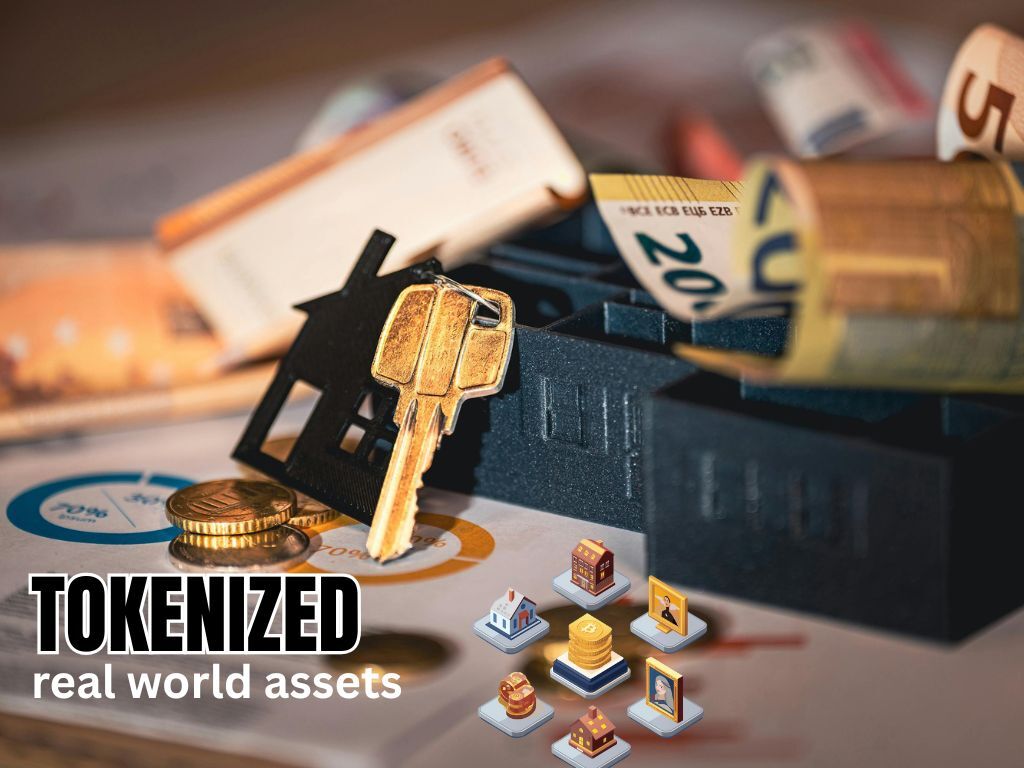
The financial world witnessed a seismic shift in 2025 as tokenized real world assets (RWAs) exploded from $5.5 billion to over $36 billion in total market value. Major institutions including BlackRock, Franklin Templeton, and JPMorgan moved beyond pilot programs into full-scale production, signaling that tokenization has officially transitioned from experimental technology to mainstream financial infrastructure.
The RWA Revolution: By the Numbers
Tokenized RWAs tripled their market value throughout 2025, reaching approximately $18.6 billion, according to industry analytics platform RWA.xyz. This explosive growth reflects fundamental changes in how traditional assets intersect with blockchain technology.
Private credit dominates the tokenized landscape at roughly $17 billion, followed by U.S. Treasuries at approximately $7.3 billion. Commodities and institutional alternative funds each command around $2 billion in tokenized value, demonstrating diversification beyond government securities.
Analysts project even more dramatic expansion ahead. Market forecasts suggest tokenized assets could reach $2 trillion by 2030, representing a 100x increase from current levels. Conservative estimates still anticipate trillion-dollar markets within five years as regulatory clarity and technical infrastructure mature.
What Makes 2025 the Breakthrough Year?
Several converging factors created perfect conditions for RWA adoption. Regulatory frameworks finally provided clarity that institutions demanded before committing capital. The United States advanced landmark legislation including the GENIUS Act and CLARITY Act during “Crypto Week,” while international jurisdictions from Singapore to Dubai established clear tokenization guidelines.
Technical infrastructure reached production-grade reliability. Scaling improvements brought costs and settlement times to levels no longer prohibitive for mainstream adoption. Ethereum processes the majority of tokenized assets at $12.3 billion, with BNB Chain and Solana hosting $1.8 billion and $782 million respectively.
Major asset managers moved decisively into tokenization. BlackRock evaluates ETF tokenization strategies while Nasdaq filed to list tokenized stocks on its exchange. Goldman Sachs and BNY Mellon issued tokenized money market funds, and Binance adopted tokenized Treasuries for off-exchange settlement operations.
Core Benefits Driving Institutional Adoption
Fractional Ownership at Scale
Traditional assets like real estate, fine art, and private equity require substantial capital commitments that exclude most investors. Tokenization enables fractional ownership, making previously inaccessible asset classes available to broader investor populations.
A commercial property worth $50 million can be divided into millions of tokens, allowing investors to purchase exposure for as little as $100. This democratization fundamentally reshapes wealth-building opportunities while creating deeper, more liquid markets for asset owners.
Enhanced Liquidity and Settlement Speed
Conventional asset transfers involve multiple intermediaries, paperwork, and settlement periods spanning days or weeks. Smart contracts automate these processes, enabling near-instantaneous settlement on blockchain networks.
Real estate transactions that traditionally require 30-60 days for closing can settle in minutes through tokenized representations. This dramatic efficiency improvement reduces costs while unlocking capital trapped in illiquid holdings.
Transparency and Compliance by Design
Blockchain’s immutable ledger provides complete transaction histories accessible to regulators and compliance officers. Tokenization platforms build KYC verification, accredited investor checks, and transfer restrictions directly into smart contracts.
This programmable compliance reduces regulatory risks while lowering operational costs associated with manual compliance processes. Institutions gain audit trails demonstrating regulatory adherence without extensive documentation systems.
24/7 Global Market Access
Traditional markets operate during business hours within specific time zones. Tokenized assets trade continuously across global blockchain networks, enabling investors to respond immediately to market conditions or portfolio rebalancing needs.
Cross-border transactions execute without correspondent banking relationships or foreign exchange complexities. This seamless global access particularly benefits international investors and institutions managing worldwide portfolios.
Leading Use Cases Transforming Finance
Tokenized U.S. Treasuries
Government bonds represent one of the most successful tokenization categories. Platforms like Ondo Finance and Circle provide tokenized Treasury products offering yield-bearing alternatives to traditional stablecoins.
Institutional investors utilize tokenized Treasuries for collateral in DeFi protocols, settlement assets, and cash management strategies. The combination of government backing with blockchain efficiency creates compelling products for risk-averse institutions exploring digital assets.
Private Credit Markets
Private credit tokenization is increasingly applied to credit funds and short-duration financing structures, reflecting institutional appetite for yield-bearing assets. Platforms like Centrifuge and Maple Finance connect traditional borrowers with on-chain lenders.
Small and medium-sized enterprises access capital through tokenized invoice financing, supply chain lending, and equipment financing. Investors diversify portfolios with fixed-income products historically available only to large institutions or family offices.
Real Estate Tokenization
Property tokenization enables fractional ownership of residential, commercial, and industrial real estate. Platforms like RealT and Propy facilitate property purchases using cryptocurrency while maintaining legal compliance.
Rental income distributes automatically to token holders through smart contracts. Property owners access liquidity by selling fractional interests without traditional refinancing costs or processes.
Commodities and Precious Metals
Gold tokenization provides digital exposure to physical precious metals stored in secure vaults. Tether’s commodity tokens and platforms like Paxos Gold offer blockchain-based gold ownership without storage concerns.
Agricultural commodities, industrial metals, and energy products increasingly utilize tokenization for futures contracts and physical delivery mechanisms. This innovation reduces counterparty risks while improving price discovery.
How Businesses Can Enter the RWA Market
For Asset Issuers
Organizations holding valuable assets can unlock liquidity through tokenization. Professional blockchain development services provide end-to-end solutions including smart contract creation, regulatory compliance structuring, and platform development.
Key considerations include selecting appropriate blockchain networks based on transaction costs and user bases, structuring offerings to comply with securities regulations, implementing robust custody solutions for underlying assets, and creating secondary markets enabling token trading.
For Trading Platforms
Cryptocurrency exchanges adding tokenized RWAs diversify revenue streams while attracting institutional clients. Stripe introduced stablecoin accounts in over 100 countries with support for holding balances and cross-border payouts, demonstrating payment giants’ recognition of tokenization opportunities.
Exchange operators should evaluate white label crypto exchange software supporting tokenized asset trading alongside traditional cryptocurrencies. Integrated compliance tools, custodial partnerships, and institutional-grade security features prove essential for RWA trading venues.
For DeFi Protocols
Decentralized finance protocols integrate tokenized RWAs as collateral, expanding beyond crypto-native assets. Aave’s Horizon Market allows institutions to supply tokenized RWAs as collateral to borrow stablecoins, reaching over $197 million in market size.
Protocol developers should consider RWA integration strategies including oracle solutions for off-chain asset pricing, risk management frameworks for traditional asset volatility, and compliance mechanisms ensuring regulatory adherence.
Regulatory Landscape and Compliance
United States Framework
The SEC’s crypto task force conducts discussions regarding regulatory treatment of tokenized securities. The SEC launched Project Crypto to study on-chain market infrastructure, signaling regulatory engagement rather than resistance.
Issuers must determine whether tokens constitute securities under Howey Test analysis, register offerings or qualify for exemptions like Regulation D or Regulation A+, implement accredited investor verification for private placements, and maintain ongoing reporting obligations.
International Developments
Singapore and Australia prioritize supervised pilots through Project Guardian and Project Acacia, experimenting with 24 innovative use cases focused on RWA tokenization. This collaborative approach between regulators and industry accelerates innovation within controlled environments.
Japan’s Financial Services Agency plans introducing comprehensive crypto legislation by 2026, including frameworks specifically addressing tokenized assets. Hong Kong provides Basel flexibility for banks using stablecoins, encouraging traditional financial institutions to explore tokenization.
Technical Infrastructure Requirements
Blockchain Selection
Ethereum dominates institutional tokenization due to established infrastructure, security history, and developer ecosystem. Layer-2 solutions like Arbitrum and Polygon offer lower costs while maintaining Ethereum compatibility and security.
Solana attracts projects requiring high throughput and low latency. Solana is one of the fastest-growing ecosystems, with builder interest increasing by 78% in recent years. Its performance characteristics suit high-frequency trading applications and real-time settlement needs.
Permissioned blockchains like Hyperledger Fabric appeal to enterprises requiring controlled access and privacy. Financial institutions often prefer hybrid approaches combining public blockchain transparency with private transaction details.
Smart Contract Architecture
Professional smart contract development from experienced Ethereum developers ensures security and functionality. Contracts must handle token minting and burning processes, transfer restrictions based on investor qualifications, dividend or interest distribution mechanisms, and upgradeability for regulatory compliance changes.
Comprehensive security audits from firms like OpenZeppelin or ConsenSys Diligence identify vulnerabilities before deployment. Bug bounty programs incentivize ongoing security research by white-hat hackers.
Oracle Integration
Tokenized assets require reliable price feeds and data from traditional financial markets. Blockchain oracles like Chainlink provide decentralized data sources resistant to manipulation.
Real estate valuations, credit ratings, and commodity prices flow on-chain through oracle networks. Multiple data sources with reputation systems ensure accuracy while preventing single points of failure.
Investment Strategies for RWA Portfolios
Yield-Focused Approaches
Tokenized government bonds and investment-grade credit provide stable income with blockchain efficiency. Yields typically match or slightly exceed traditional equivalents while offering superior liquidity and 24/7 access.
Platforms like Ondo Finance structure products specifically for institutional yield requirements. Minimum investments start around $5 million for wholesale products, though retail-focused alternatives emerge with lower thresholds.
Growth-Oriented Strategies
Early-stage RWA protocols offer token appreciation potential alongside yield generation. Protocol tokens like ONDO, MPL (Maple), and CFG (Centrifuge) provide governance rights and fee-sharing mechanisms.
These investments carry higher risks than underlying tokenized assets but potentially deliver superior returns as protocols scale. Thorough due diligence regarding team experience, technology architecture, and regulatory compliance remains essential.
Balanced Portfolio Integration
Traditional investors can allocate 5-10% of portfolios to tokenized RWAs, gaining cryptocurrency exposure while maintaining familiar asset class characteristics. This approach provides blockchain benefits without full portfolio transformation.
Rebalancing mechanisms automated through smart contracts maintain target allocations, reducing management overhead while ensuring disciplined investment strategies.
The Path Forward
Tokenized real world assets represent the bridge connecting traditional finance with blockchain innovation. As regulatory frameworks mature, technical infrastructure scales, and institutional adoption accelerates, RWAs position themselves as the killer application driving mainstream blockchain adoption.
For entrepreneurs, developers, and financial institutions, the opportunity is clear: build the infrastructure, platforms, and products enabling this trillion-dollar transformation. The question isn’t whether tokenization will reshape finance—it’s whether you’ll participate in building that future.
Ready to launch your tokenized asset platform? Partner with blockchain experts who combine technical mastery with regulatory knowledge, turning your tokenization vision into compliant, scalable reality.

















0 Comments