
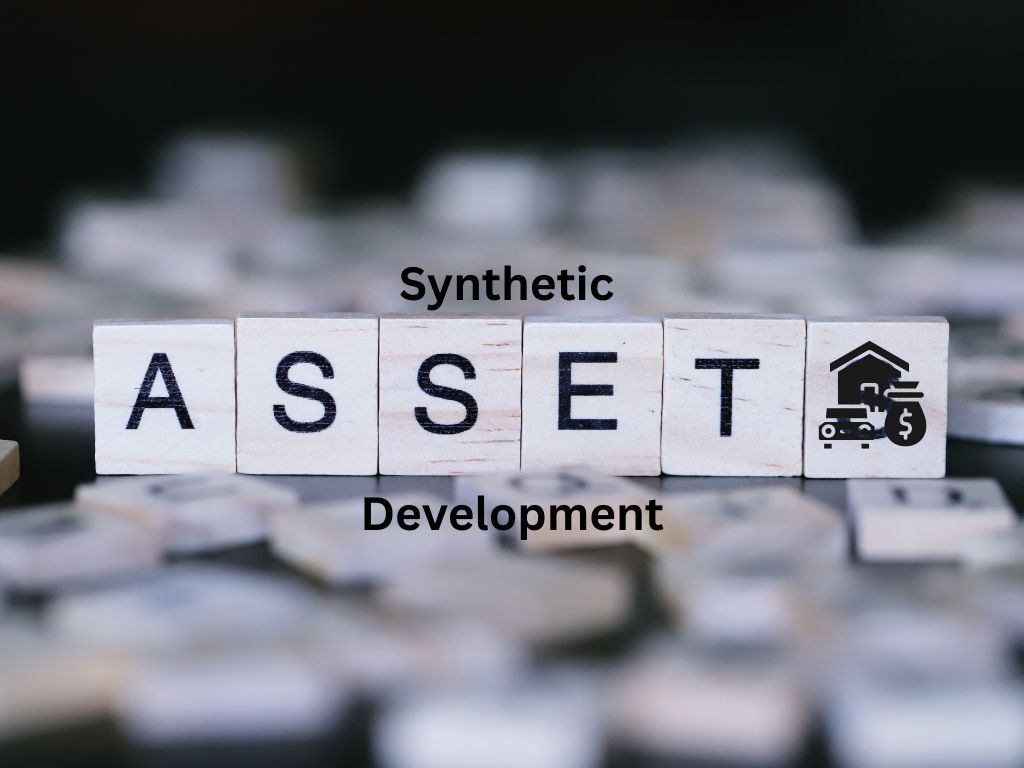
The financial world is undergoing a massive transformation. By 2034, the tokenization market is projected to reach $30.1 trillion, and one of the key drivers behind this growth is synthetic assets. These blockchain-powered instruments are redefining how people access, trade, and interact with financial markets.
From stocks and commodities to currencies and indices, synthetic assets allow users to gain exposure to real-world assets without actually owning them. This innovation is unlocking new levels of liquidity, accessibility, and efficiency across global markets.
For businesses and Web3 innovators, synthetic asset development represents a powerful opportunity to build the next generation of decentralized financial products.
What Are Synthetic Assets?
Synthetic assets are digital tokens that mirror the value of real-world assets. They are created using smart contracts and track the price of underlying assets such as stocks, gold, fiat currencies, or even other cryptocurrencies.
Unlike traditional ownership, synthetic assets do not require custody of the actual asset. Instead, they rely on price feeds and collateral mechanisms to maintain value parity.
For example, a synthetic version of gold allows users to benefit from gold price movements without physically holding gold. This makes investing more accessible and eliminates many barriers associated with traditional finance.
Why Synthetic Assets Are Driving a $30.1T Market
The projected growth of the tokenization market is not accidental. It is fueled by the advantages that synthetic assets bring to global finance.
First, they remove geographical barriers. Anyone with an internet connection can access global financial markets without relying on traditional intermediaries. This opens up investment opportunities to millions of people worldwide.
Second, synthetic assets increase liquidity. Traditional assets like real estate or commodities are often illiquid. Tokenizing them allows fractional ownership and easier trading, which significantly improves market efficiency.
Third, they reduce costs. By eliminating intermediaries such as brokers and custodians, synthetic assets lower transaction fees and operational overhead.
To support this ecosystem, businesses are investing in advanced tokenized asset platform creation that enables seamless issuance, trading, and management of synthetic assets.
How Synthetic Assets Work
Synthetic assets rely on a combination of smart contracts, collateral, and price oracles.
Users typically lock collateral in a smart contract to mint synthetic tokens. This collateral acts as a safety buffer to ensure the system remains solvent. The value of the synthetic asset is maintained through over-collateralization and real-time price tracking.
Price data is fetched from external sources using oracles. These oracles ensure that the synthetic asset accurately reflects the value of the underlying asset.
Trading happens on decentralized platforms where users can buy, sell, or exchange synthetic assets just like cryptocurrencies.
The Role of Derivatives in Synthetic Assets
Synthetic assets are closely related to derivatives. In fact, they can be considered a form of decentralized derivative product.
They allow users to speculate on price movements, hedge risks, and diversify portfolios without holding the underlying asset. This makes them highly versatile financial instruments.
Modern platforms are increasingly focusing on derivative protocol development to support advanced trading features such as leverage, perpetual contracts, and options.
These features enhance the functionality of synthetic assets and attract a broader range of users, from retail traders to institutional investors.
Importance of Oracles in Synthetic Asset Systems
Oracles are a critical component of synthetic asset platforms. They provide real-time price data that determines the value of synthetic tokens.
Without accurate and reliable data, the entire system can fail. Incorrect price feeds can lead to mispricing, liquidation issues, and potential exploits.
This is why robust oracle integration services are essential. They ensure that data is secure, tamper-resistant, and updated in real time.
In 2026 and beyond, oracle technology continues to evolve, offering improved accuracy and resilience against manipulation.
Key Benefits of Synthetic Assets
Synthetic assets offer several advantages that make them attractive to both users and businesses.
Accessibility is one of the biggest benefits. Users can gain exposure to global markets without needing traditional brokerage accounts.
Diversification is another advantage. Investors can easily access multiple asset classes from a single platform.
Efficiency is also improved. Transactions are faster, cheaper, and more transparent compared to traditional financial systems.
Additionally, synthetic assets enable innovation. Developers can create new financial products that were not possible before, such as tokenized indices or hybrid assets.
Use Cases Across Industries
The applications of synthetic assets go beyond trading.
In finance, they enable decentralized trading of stocks, commodities, and currencies. Users can hedge risks or speculate on price movements without intermediaries.
In real estate, synthetic assets allow fractional ownership of properties, making investment more accessible.
In gaming and the metaverse, they can represent in-game assets or virtual economies, creating new monetization opportunities.
Even enterprises are exploring synthetic assets for supply chain financing and asset management.
Challenges in Synthetic Asset Development
Despite their potential, synthetic assets come with challenges.
One major issue is collateral management. Maintaining sufficient collateral is essential to prevent system instability.
Another challenge is regulatory uncertainty. Governments are still evaluating how to classify and regulate synthetic assets.
Security is also a concern. Smart contract vulnerabilities and oracle manipulation can pose risks to users and platforms.
To overcome these challenges, developers must focus on strong architecture, rigorous testing, and continuous monitoring.
Development Roadmap for Synthetic Asset Platforms
Building a synthetic asset platform requires careful planning and execution.
The first step is defining the asset types and use cases. This determines the platform’s design and functionality.
Next, developers create smart contracts for minting, trading, and collateral management. These contracts must be secure and efficient.
Oracle integration follows, ensuring accurate price tracking. A user-friendly interface is then developed to simplify interactions.
Finally, the platform undergoes testing, auditing, and optimization before launch.
Why the Future Belongs to Synthetic Assets
The global financial system is moving toward digitization. Synthetic assets are at the forefront of this transformation.
They democratize access to financial markets, increase efficiency, and enable new forms of economic activity. As technology evolves, their adoption is expected to grow rapidly.
By 2034, the $30.1 trillion tokenization market will likely be driven by platforms that successfully integrate synthetic assets into their ecosystems.
Final Thoughts
Synthetic assets are more than just a trend. They represent a fundamental shift in how financial markets operate.
For innovators and entrepreneurs, synthetic asset development offers a chance to be part of a multi-trillion-dollar market transformation.
The future of finance is not just digital.
It is synthetic, decentralized, and borderless.













0 Comments