
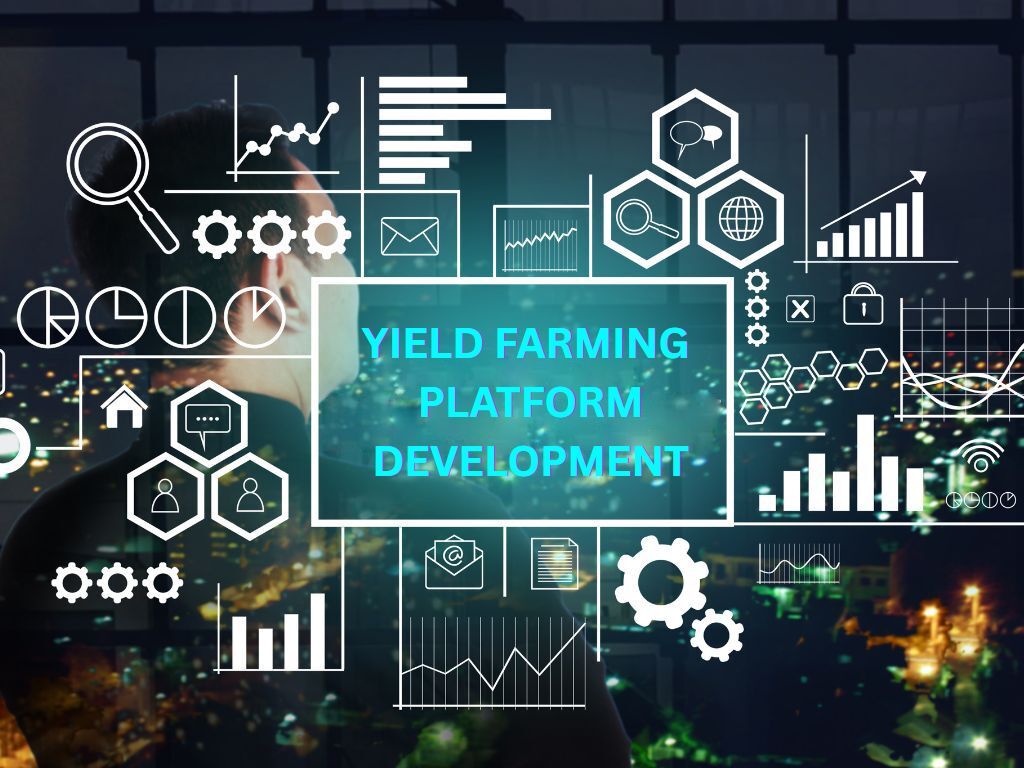
Yield farming platforms have become one of the most profitable segments in decentralized finance in 2026. With returns reaching up to 45% annually, these platforms are attracting both retail and institutional investors looking for higher yield opportunities beyond traditional finance.
This rapid growth is driven by improved DeFi infrastructure, better capital efficiency, and advanced automation strategies. For businesses entering Web3, yield farming platform development offers a powerful opportunity to build scalable and revenue-generating ecosystems.
Understanding Yield Farming in 2026
Yield farming is the process of locking crypto assets into DeFi protocols to earn rewards. These rewards typically come from transaction fees, governance tokens, and incentive distributions.
Unlike early DeFi models, modern yield farming platforms are far more sophisticated. They no longer rely on a single protocol. Instead, they dynamically move funds across multiple pools and strategies to maximize returns.
This evolution has significantly improved efficiency and reduced idle capital, making yield farming more sustainable and attractive.
Why Yield Farming Platforms Generate 45% Returns
The high returns seen in 2026 are not based on a single revenue stream. They are the result of layered earning mechanisms working together.
One of the primary drivers is trading fee distribution from liquidity pools. As decentralized exchanges continue to grow, higher trading volume translates into more fees for liquidity providers.
Another key factor is token incentives. Platforms distribute governance tokens to users who provide liquidity. When these tokens gain value, overall returns increase significantly.
Advanced platforms also integrate automated yield optimization which continuously reallocates funds to the most profitable pools. This ensures that capital is always working at maximum efficiency without requiring manual intervention.
The Role of Yield Aggregators
Yield aggregators have transformed how farming works. Instead of users manually selecting pools, aggregators automatically optimize strategies across multiple protocols.
This is where DeFi yield aggregator development becomes essential. Aggregators analyze real-time data, compare yields, and shift funds accordingly to maximize returns.
By reducing complexity for users, aggregators have made yield farming accessible to a broader audience, which in turn has increased total value locked (TVL) across platforms.
Liquidity Mining as a Growth Engine
Liquidity mining plays a major role in boosting yield farming returns. Platforms incentivize users to provide liquidity by offering additional token rewards.
Strategic Liquidity mining platform creation ensures that liquidity pools remain deep and stable. This improves trading efficiency and attracts more users to the platform.
When designed correctly, liquidity mining creates a cycle of growth. More liquidity leads to more trading, which generates more fees and increases rewards for participants.
Core Components of a Yield Farming Platform
A successful yield farming platform requires strong technical and economic foundations. At its core, it must include smart contracts that manage deposits, withdrawals, reward calculations, and fund allocation.
The platform should also integrate liquidity pools, staking mechanisms, and yield aggregation strategies. A real-time dashboard is essential to display earnings, APY, and portfolio performance.
Security is a critical component. Platforms must undergo regular audits and implement safeguards against exploits, flash loan attacks, and contract vulnerabilities.
Development Process for Yield Farming Platforms
Building a yield farming platform starts with defining the economic model. Developers must determine reward distribution, token supply, and fee structures. A balanced model ensures sustainability and prevents excessive inflation.
Next, the platform architecture is designed. This includes smart contract development, integration with liquidity pools, and yield optimization logic.
User interface design is equally important. A simple and intuitive dashboard helps users track their investments and understand their returns.
After development, the platform undergoes rigorous testing and auditing. Continuous monitoring and updates ensure long-term reliability.
Challenges in Yield Farming Platform Development
Despite high returns, yield farming platforms face several challenges. Market volatility can impact returns, especially in pools with volatile assets.
Smart contract risks remain a concern. Even minor bugs can lead to significant losses if exploited.
Another challenge is maintaining sustainable rewards. Over-incentivization can lead to token inflation, reducing long-term value.
To overcome these issues, platforms must focus on strong architecture, careful tokenomics, and continuous optimization.
Why 2026 Is the Best Time to Build
The DeFi ecosystem is more mature than ever. Cross-chain compatibility allows capital to move freely across networks. Layer 2 solutions have reduced transaction costs, making yield farming more accessible.
At the same time, investors are actively seeking higher returns. Traditional financial systems cannot match the yield opportunities offered by DeFi platforms.
This creates a perfect environment for launching new yield farming platforms with innovative features and strong growth potential.
Final Thoughts
Yield farming platforms are generating up to 45% annual returns in 2026 because they combine liquidity incentives, trading fees, and automated optimization strategies. They represent one of the most powerful wealth-generation tools in decentralized finance.
For businesses, yield farming platform development is not just an opportunity — it is a strategic move into a rapidly expanding market.
By leveraging DeFi yield aggregator development, implementing effective liquidity mining platform creation, and integrating automated yield optimization, you can build a scalable platform that attracts users, maximizes returns, and thrives in the evolving DeFi ecosystem.
















0 Comments